




Virulence regulation
Participants:
Carmen Beuzón López (PI), Javier Ruiz Albert (PI), Jose S. Rufián, Fernando Baisón, Juan Manuel Ocaña Gálvez
Collaborators:
Mª Antonia Sánchez Romero (US), Fernando Govantes Romero (UPO); Adam Schikora (Julius Kühn-Institut)
About the line
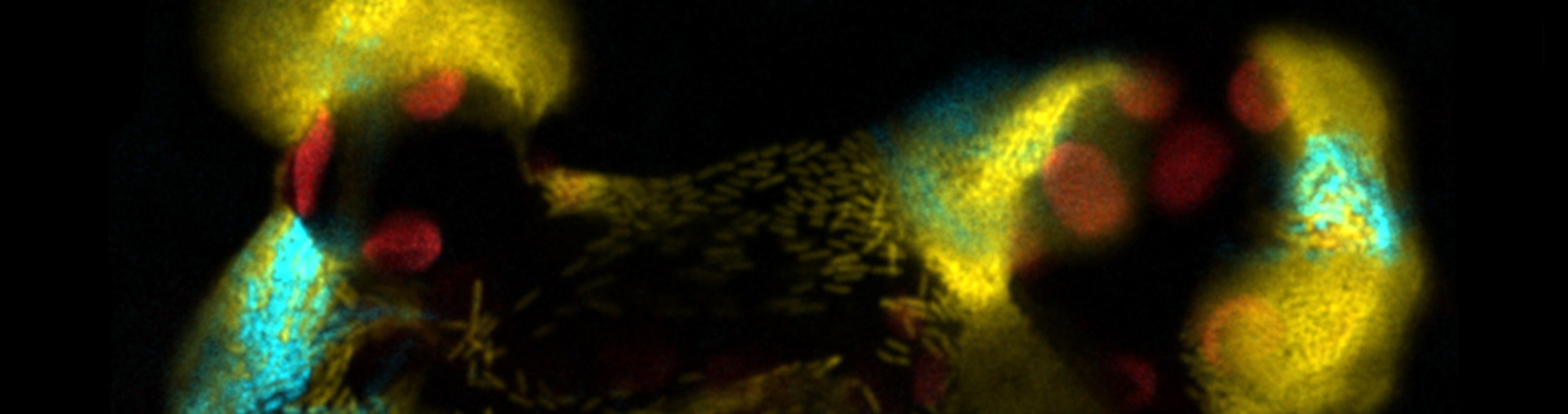
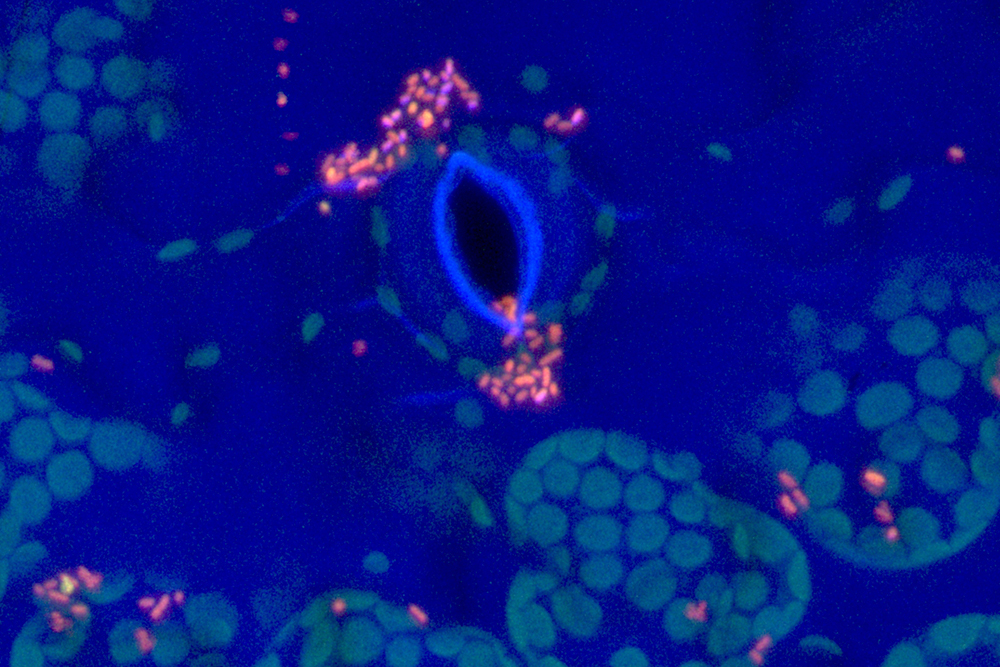
In this research line, we analyse the mechanisms underlying phenotypic heterogeneity in the phytopathogenic bacterium Pseudomonas syringae, and its role in bacterial adaptation to the plant environment. We were the first to describe in phytopathogenic bacteria the phenotypic heterogeneity of the T3SS and the flagellum, which gives rise to spatially structured, complex expression patterns in planta, with phenotypically distinct subpopulations cooperating to colonize the plant tissue and disseminate. The formation of bacterial phenotypic lineages differing in these key aspects of P. syringae virulence extends to the heterogeneous expression of lipopolysaccharide (LPS) synthesis genes. Phenotypic heterogeneity is integrated into the bacterial regulatory network through an epigenetic mechanism, which likely involves DNA methylation. We also investigate how the heterogeneity processes described in the human pathogen Salmonella enterica allow these bacteria to colonize plants, leading to epidemic outbreaks associated with the consumption of fruits and vegetables.
Recent publications
- Mancera-Miranda L, Rufián JS, López-Pagán N, Ruiz-Albert J, Beuzón CR. Pseudomonas syringae Lipopolysaccharide Synthesis Gene wbpL Displays Heterogeneous Expression Within In Vitro and In Planta Populations. Microbiologyopen. 2025 Aug;14(4):e70031. doi: 10.1002/mbo3.70031. PMID: 40693383.
- López-Pagán N, Rufián JS, Luneau J, Sánchez-Romero MA, Aussel L, van Vliet S, Ruiz-Albert J, Beuzón CR. (2025). Pseudomonas syringae subpopulations cooperate by coordinating flagellar and type III secretion spatiotemporal dynamics to facilitate plant infection. Nat Microbiol. DOI: 10.1038/s41564-025-01966-0.
- Rufián, JS; Ruiz-Albert, J; Beuzón, CR (2022). Fluorescently labeled Pseudomonas syringae DC3000 and 1449b wild-type strains constitutively expressing either eGFP, eCFP, or dsRED. microPublication Biology. 10.17912/micropub.
biology.000595. - Zarkani AA, López-Pagán N, Grimm M, Sánchez-Romero MA, Ruiz-Albert J, Beuzón CR, Schikora A (2020) Salmonella heterogeneously expresses flagellin during colonization of plants. Microorganisms. DOI:10.3390/microorganisms8060815
- Rufián JS, López-Márquez D, López-Pagán N, Grant M, Ruiz‑Albert J, Beuzón CR (2018) Generating Chromosome-Located Transcriptional Fusions to Fluorescent Proteins for Single-Cell Gene Expression Analysis in Pseudomonas syringae. Methods in Molecular Biology. DOI: 10.1007/978-1-4939-7604-1_15
- Rufián JS, Sanchez-Romero MA, Lopez-Marquez D, Macho AP, Mansfield JW, Arnold DL, Ruiz‑Albert J, Casadesus J, Beuzon CR (2016) Pseudomonas syringae differentiates into phenotypically distinct subpopulations during colonization of a plant host. Environmental Microbiology. DOI: 10.1111/1462-2920.13497